


FotoGear LensNippon Kogaku | Nikon Nikkor


Page Two:
Reflex • 50cm NKJ f5.0 500mm NKJ f8.0
500mm N f8.0
1000mm NKJ f11.0
1000mm Nikkor f11.0
500mm NKJ f8.0
500mm N f8.0
1000mm NKJ f11.0
1000mm Nikkor f11.0
Focusing Units • AU-1 and CU-1 + Rare CU-1 Cradle
Super-Tele • 400mm NKJ PC f4.5
600mm PC f5.6
800mm PC f8.0
1200mm PC f11.0
Tilt/Shift • 28mm PC Perspective Control f3.5
35mm NKJ PC Perspective Control f2.8
Micro • 55mm NKJ f3.5
55mm P f3.5
55mm f2.8
105mm f2.8
105mm f4.0 M
200mm f4.0 Micro
Zoom • 200-400mm f4.0 ED Rare
25~50mm f4.0
28~45mm f4.5
28~85mm f3.5 Macro
43~86mm f3.5 NKJ Zoom
Super Tele-Zoom • 50~300mm f4.5
50~300mm IF ED f4.5
85~250mm f9.5
200~600mm f9.5
Flat Field Macro • Rayfact MJ90 f4.0
LensScope • F Lens Converter
Spiratone • Portragon 100mm f/4 Lens
• Nikkor Reflex
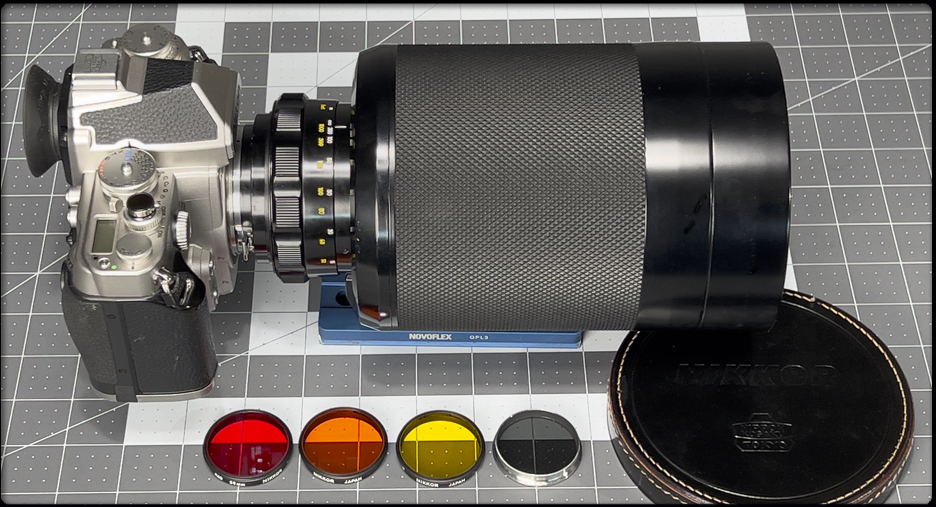


52 • Rare Nippon Kogaku N Reflex Mirror 50.0cm f5.0 - Leather Cap
• The Nippon Kogaku Reflex-Nikkor 50.0cm f/5 is a historically significant and rare mirror lens, notable for being one of the first telephoto lenses introduced alongside the Nikon F mount in 1959. It was legendary for its unusually large aperture (f/5) for a 500mm mirror lens, which allowed for handheld shooting at a time when most super-telephotos required heavy tripods.• The "50.0cm" designation (rather than 500mm) is a hallmark of Nippon Kogaku's earliest F-mount lenses.
• Serial Number Blocks: Early series (approx. 1963) often have serial numbers starting around 181011, while later blocks from 1966–1968 range from 181601 to 183318.
• Physical Variations: Early units have a scalloped focusing ring and data printed on a slanting ring, which can interfere with certain Photomic finders. Later versions moved this data to a flat ring for better clearance.
• Legacy: It was eventually replaced in late 1968 by the significantly smaller and lighter (but slower) 500mm f/8 Reflex-Nikkor.
• Filters as Optical Components: For the best performance, one 39mm filter must always be installed in the rear mount, as it is factored into the lens's optical design.
• Tripod Mount: The lens features a 360° rotatable tripod collar with a unique spring-latch release for switching between landscape and portrait orientations.
• Production Year: 1961 • FOV: 5.0° • Min Focus: 50.0 ft • Aperture: f5.0 • Filters: 39mm Rear / 122mm Front
• Dimensions: 125mm x 199.6mm • Weight: 1700g • Lens Hood: 122mm

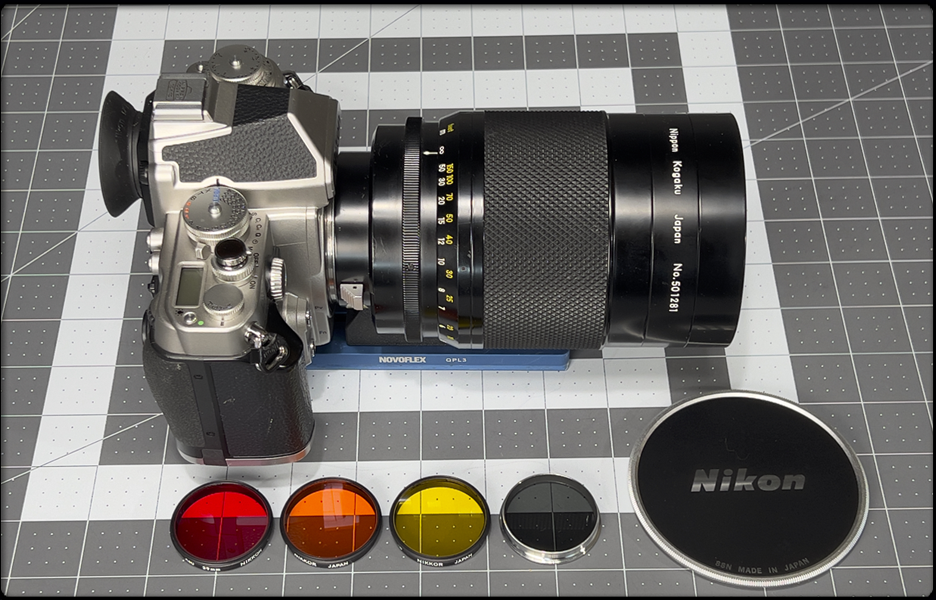
53 • Nippon Kogaku Reflex Mirror 500mm f8.0
The Nippon Kogaku Reflex-Nikkor 500mm f/8.0 is a compact catadioptric (mirror) lens originally released in late 1968 to replace the much larger f/5 version. It is characterized by its portable design and unique "donut-shaped" bokeh produced by the central obstruction of the mirror.• Original (1968–1971): Engraved Nippon Kogaku Japan. These early units often lacked multicoating.
• "C" Version (1974): Marked Reflex-Nikkor-C to signify multi-coated optics for improved contrast and flare reduction.
• "New" or Ai-s Version (1983/84): A major redesign that was even more compact (840g) and featured an orange band signifying macro capabilities, with a significantly closer minimum focus distance of 1.5 meters.
• Tripod Mount: Features a built-in, fixed tripod foot that can be rotated 90 degrees for quick switching between landscape and portrait orientations.
• Focus Ring: A large, rubberized focusing ring with a diamond-shaped texture and a long "throw" (rotational travel) to assist with precise focusing at long focal lengths.
• Filter Requirement: Because a filter is part of the optical path, one (typically the L37c UV) should always be screwed into the rear of the lens during use.
• Production Year: 1968
• FOV: 5°
• Min Focus: 13.0 ft
• Aperture: f8.0
• Filters: 39mm Rear
• Dimensions: 93mm x 142mm
• Weight: 1000g
• Lens Hood: 88mm
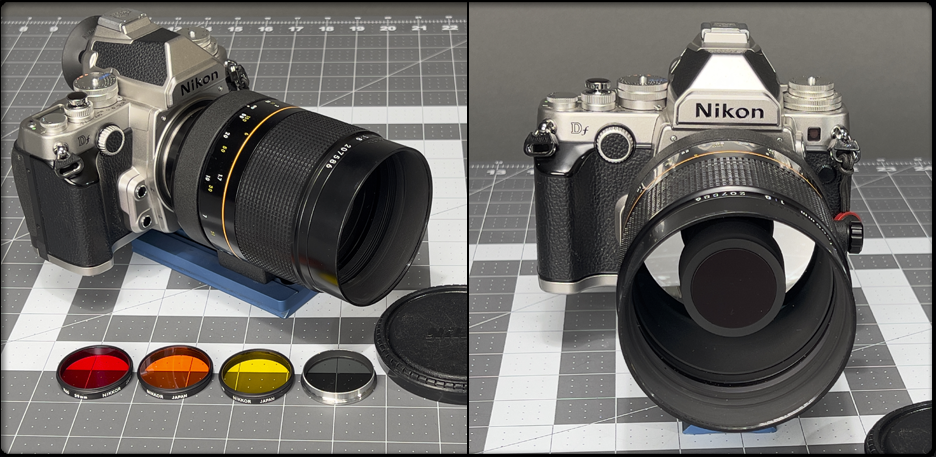
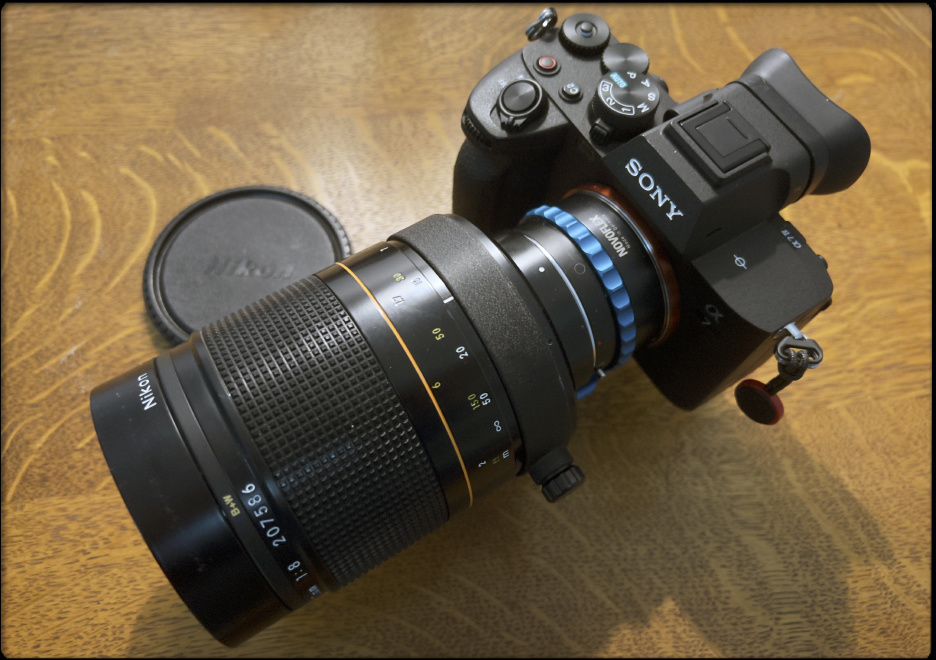
54 • Nikkor N Macro Reflex Mirror 500mm f8.0
The Nikon Reflex-Nikkor 500mm f/8 N (also known as the "New" or Macro version) was released in April 1984. It is the final and most compact iteration of Nikon's 500mm mirror lenses, easily identified by a distinctive orange band on the barrel signifying its macro capabilities.• Compactness: Significantly smaller and lighter than the previous "C" version (which weighed 1,000g and only focused to 4m). • Optical Design: Uses a catadioptric (mirror) system that inherently eliminates chromatic aberration. • Donut Bokeh: Highlights in out-of-focus areas appear as "donuts" due to the secondary mirror obstruction. • Tripod Mount: Features a built-in rotatable tripod collar with detents at 90° for easy switching between orientations. • Required Filters: A rear 39mm filter is part of the optical design and should be left in place (usually an L37c UV filter) for optimal performance.
• Production Year: 1983
• FOV: 5°
• Min Focus: 4.92 ft
• Aperture: f8.0
• Filters: 82mm
• Dimensions: 88.9mm x 109mm
• Weight: 840g
• Lens Hood: Nikon HN-27
• Focus Throw: Extensive 420° to 500°
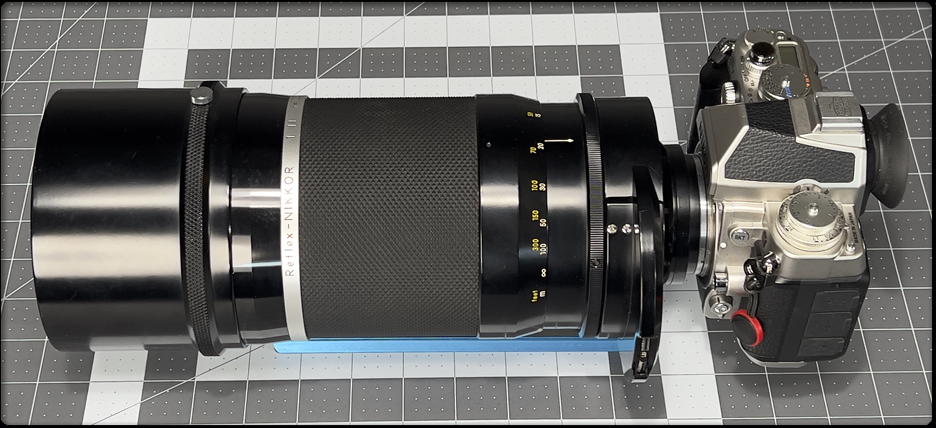
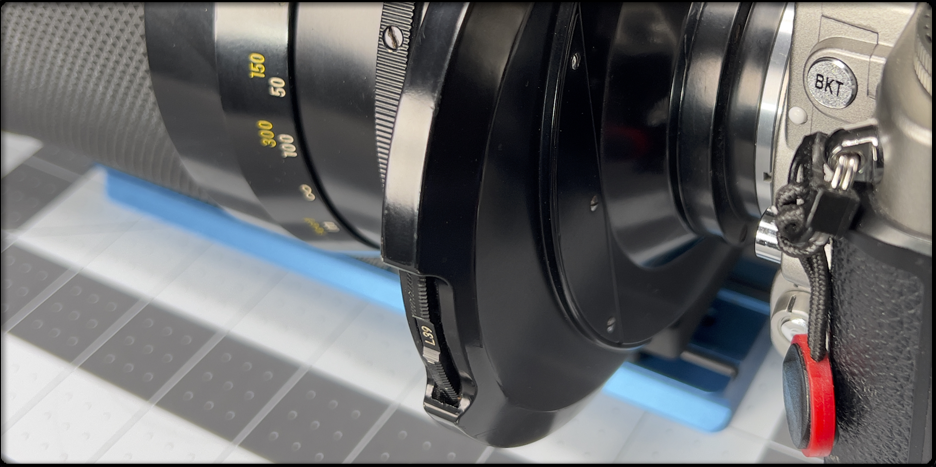
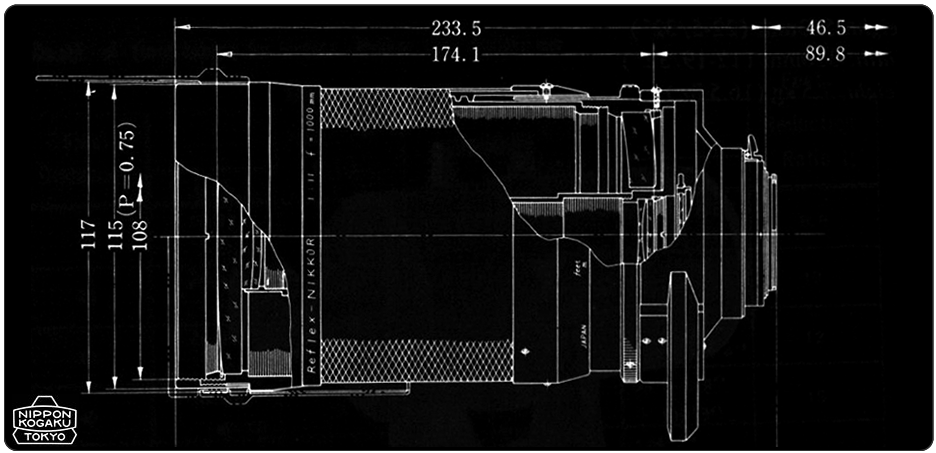
55 • Nippon Kogaku Reflex Mirror 1000mm f11.0 - Leather Cap
The Nippon Kogaku Reflex-Nikkor 1000mm f/11 is a specialized catadioptric (mirror) lens first introduced in October 1965. It replaced the massive 1000mm f/6.3 rangefinder-era "bazooka" lens with a significantly more compact and lightweight design for the Nikon F system.• Early "Nippon Kogaku" Version: The earliest models are marked "Nippon Kogaku Japan" and are highly sought after by collectors for their historical significance. These early versions typically feature a silvery metallic ring for lens data and a tiny diamond-shaped texture on the wide focusing ring.
• Catadioptric Principle: By "folding" the light path using internal mirrors, the physical length of the lens is less than half its focal length.
• Filter Turret vs. Screw-in: While the 1965 version relied on built-in revolving filters, the design was updated around 1974 to use rear screw-in filters instead.
• Optical Quality: The mirror design virtually eliminates chromatic aberration. However, it produces a characteristic "doughnut-shaped" bokeh in out-of-focus areas due to the central secondary mirror.
• Accessories: It often came with a built-in telescopic lens hood and a 360° rotating tripod collar.
• Production Year: 1966
• FOV: 2.30°
• Min Focus: 26.24 ft
• Aperture Scale: fxxx to fxxx
• Filters: 4X Built In
• Dimensions: 117mm x 238mm
• Weight: 1900g
• Lens Hood: Nikon 108mm Slip On

56 • Nikkor Reflex Mirror 1000mm f11.0
The Nikon Reflex-Nikkor 1000mm f/11 is a compact catadioptric (mirror) super-telephoto lens known for its 20x magnification compared to a standard 50mm lens. First introduced in 1965 to replace the much larger f/6.3 version, it utilizes a "folded" light path to achieve a massive focal length in a barrel only about 9 inches long.1. Original (1965): Featured a built-in rotating filter turret.
2. Updated (1974): Redesigned for 39mm rear screw-on filters.
3. Final Version (1976): Added Nikon Integrated Coating (NIC) for improved contrast and flair resistance.
• Catadioptric Design: Effectively eliminates chromatic aberration because it uses mirrors rather than standard glass lenses.
• Doughnut Bokeh: Due to the central secondary mirror, out-of-focus highlights appear as distinct ring or "doughnut" shapes.
• Built-in Handling: Features a 360° rotating tripod collar for quick orientation changes and a built-in telescopic lens hood.
• Filters: Early versions had a built-in internal filter turret, while the post-1974 "New" version moved to 39mm rear screw-in filters.
• Production Year: 0000 • FOV: 2°30'° • Min Focus:25.0 ft• Aperture Scale: f11.0 • Filters: 108mm2
• Dimensions: 000mm x 000mm • Weight: 1.9k 4.2 lbsg • Lens Hood N/A
• Nikkor Focusing Units for Super-Tele Lens Heads

57 • Nikkor Focusing Units
Focusing Unit AU-1

  The Nikon AU-1 Focusing Unit is a specialized, heavy-duty helical focusing mount introduced in 1976 specifically for Nikon's older ED super-telephoto lens heads (such as the 600mm f/5.6, 800mm f/8, and 1200mm f/11). It was designed to provide smoother, more precise focusing for these massive lenses compared to earlier models.


	 •	Production year 1976 •	88mm screw-in lens mount •	Distance scale calibrated in feet

	 •	Apertures 4.5 to 22 •	9 iris blades •	Slip-in holder for 52mm filters  •	Screw-in focusing handle


       Focusing Unit CU-1


       The Nikon Focusing Unit CU-1 is an early, specialized, modular focusing mount designed by Nikon in 1964 for use with older, non-integrated Nikkor super-telephoto lens heads. It acts as a bridge between the lens head (optics) and the camera body, housing the focusing mechanism, focusing ring, tripod collar, and aperture control.


		 •	IIinterchangeable heads 400mm, 600mm, 800mm, and 1200mm

	 •	The CU-1 is recognized by a gray-colored, wide focus ring. •	2.2 lbs


       Rare Nikkor Focusing Unit CU-1 Focus Cradle

       •	 The CU-1 cradle is designed for use with modular super telephoto heads


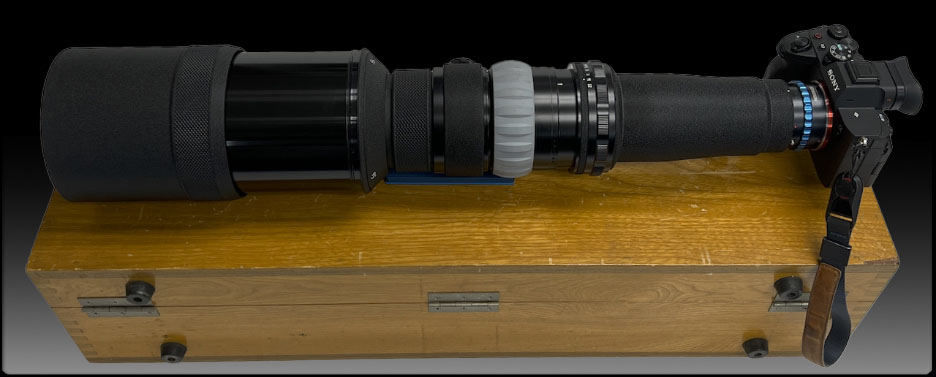
• Nikkor Super-Tele
58 • Nippon Kogaku Q Super TelePhoto 400mm f4.5
The Nippon Kogaku Nikkor-Q 400mm f/4.5 is a vintage super-telephoto lens introduced around 1964. It is a unique "two-part" system consisting of a detachable lens head and a separate focusing unit.•: 4 elements in 4 groups. The "Q" in its name stands for Quattuor, indicating this four-element design.
• Unlike modern lenses, it requires a separate focusing adapter (such as the AU-1 or CU-1) to provide focus and automatic diaphragm control.
• Dimensions: It is a massive lens by vintage standards, with a total length of approximately 464mm and a weight of about 4.3 kg
• Filter Size: It uses a very large 122mm screw-in filter or Series IX in the hood.
• Image Quality: Even today, it is known for being sharp with high contrast and pleasant color rendition. However, it may show chromatic aberration in high-contrast areas and is prone to flare as it was primarily single-coated.
• Production Year: 1964
• FOV: 6-10°
• Min Focus: 10.82 ft
• Aperture Scale: f4.5 to f22.0
• Filters: 122mm
• Dimensions: 135mm x 472mm
• Weight: 3.1kg with focus unit
• Lens Hood: Built In
59 • Nikkor PC Super TelePhoto 600mm f5.6 + Original Wood Case
The Nikkor-P Auto 600mm f/5.6 is a manual focus super-telephoto lens from the 1970s, designed for Nikon F-mount cameras. It features a 5-element in 4-group construction, built-in telescopic lens hood, 122mm front filter size, and required a focusing unit or heavy tripod due to its 3.6kg weight (without tripod collar/focusing unit).• 600mm f/5.6s IF-ED: A later version utilizing Internal Focusing (IF) and Extra-low Dispersion (ED) glass. It was much lighter (2.7kg), had better optical performance, and focused down to 5.0m (18.1ft).
• Pre-AI Version (ED): Sometimes found with ED glass, it had a lens head of ~2,300g, needing a 88mm screw-in focusing unit (like AU-1). These lenses were designed for high-resolution, long-distance photography, often used for nature, wildlife, or surveillance applications. They are entirely manual focus.
• Production Year: 1978 • FOV: 4-10° • Min Focus: 35.0 ft • Aperture Scale: f5.6 to f22.0 • Filters: 122mm
• Dimensions: 235mm x 517mm • Weight: 3.6kg with focusing unit • Lens Hood: Built In Telescopic

60 • Nikkor PC Super TelePhoto 800mm f8.0
The Nikkor-P.C Auto 800mm f/8.0 is a vintage manual focus super-telephoto lens introduced by Nippon Kogaku (Nikon) in the early 1970s, recognized for its exceptional reach, solid metal construction, and multi-coated optics. It was part of a series of long focal length lenses that often required a separate or dedicated focusing unit (such as the AU-1) to operate.• Lens Construction: 5 elements in 5 groups (earlier versions may differ slightly, later designs sometimes 9 elements)
• Coating: Multicoated ("C" designation) with Nikon Integrated Coating (NIC)
• Lens Head System: This lens was often sold as a "lens head," requiring a dedicated focusing unit like the Nikon AU-1 to focus
• Multi-Coating ("C"): The "P.C" designation (P for 5 elements, C for Coated)
• Performance: The lens is generally known for producing very sharp, high-contrast images with good color saturation, especially when stopped down slightly from wide open.
• Handling: Due to its length and weight, it is susceptible to vibrations, making a heavy-duty tripod or support system mandatory.
• Usage Notes: It features a built-in telescopic lens hood and a manual aperture diaphragm, often with a "stop-down" metering method.
• Production Year: 1978
• FOV: 3°
• Min Focus: 35.0 ft
• Aperture Scale: f5.6 to f22.0
• Filters: 122mm
• Dimensions: 235mm x 517mm
• Weight: 3.6kg with focusing unit
• Lens Hood: Built In
61 • Nikkor PC Super TelePhoto 1200mm f11.0
The Nikkor-P.C 1200mm f/11 (and its successor, the ED IF AIS version) is a legendary super-telephoto lens for Nikon F-mount, introduced in the mid-1960s to early 1970s for specialized sports and wildlife photography. Known for its immense reach (24x magnification compared to a 50mm lens), it was frequently paired with the Nikon AU-1 focusing unit or used as a dedicated manual focus lens.• Optics: 5 elements in 5 groups (early Nikkor-P.C) or updated ED glass versions.
• Aperture: Fixed maximum aperture of f/11, ranging down to f/64.
• Focusing: Manual focus, often requiring an external focusing unit (like the AU-1) in earlier models.
• Size: Over 3 feet long when fully assembled.
• Built-in Hood: Features a telescopic lens hood.
• Tripod Mount: Includes a fully rotatable tripod mounting collar for switching between horizontal and vertical shooting.
• Filters: Uses 122mm screw-in filters at the front or 39mm rear drop-in filters.
• Production Year: 1978
• FOV: 4-10°
• Min Focus: 35.0 ft
• Aperture Scale: f5.6 to f22.0
• Filters: 122mm
• Dimensions: 235mm x 517mm
• Weight: 3.6kg with focusing unit
• Lens Hood: Built In
• Nikkor PC Perspective Control

62 • Nikkor PC Perspective Control Tilt Shift 28mm f3.5
The Nikkor PC 28mm f/3.5 (introduced 1980) is a manual-focus, wide-angle shift lens designed for architectural and interior photography to correct perspective distortion by shifting 11mm off-center. It features an 8-group, 10-element retrofocus design (introduced in 1980 as a 28mm f/3.5, succeeding the earlier 35mm F4).•Perspective Control: Offers a 360° rotating barrel with 11mm shift capacity in any direction.
• Sharpness: Excellent when centered; stops down best to f/8-f/11 for critical, shifted architectural work.
• Build: Highly durable, all-metal construction, with smooth, precise shift mechanisms.
• Limitations: While designed for straight lines, it can display complex distortion, and sharpness drops significantly at maximum 11mm shift.
• Usage: It is ideal for taking photos of buildings without converging vertical lines.
• Shift Field of View: 74-92° • Minimum Focus: 11.81" • f3.5-22 • Filter: 72mm • Nikon HN-9 Lens Hood

63 • Nikkor PC Perspective Control Tilt Shift 35mm f2.8
The Nikon PC-Nikkor 35mm f/2.8 is a manual focus perspective control (shift) lens, optimized for architectural and interior photography to correct converging vertical lines. It features 11mm of shift capability, 360-degree rotation for shifting in any direction, 7-element construction, and 52mm filter threading, providing a 62-degree angle of view.• Shift Field of View :62-78° • Minimum Focus: 11.81" • f2.8-22 • Filter: 52mm • Nikon HK-1 Lens Hood
• Nikkor Macro
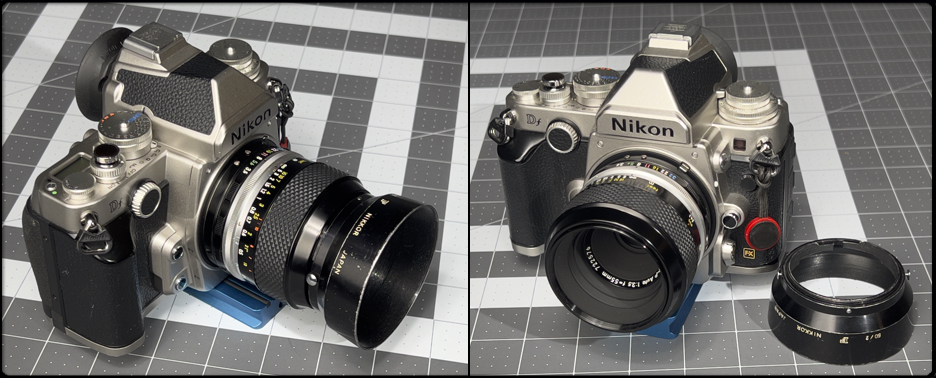
64 • Nippon Kogaku Micro 55mm f3.5
The Nippon Kogaku Micro-Nikkor-P Auto 55mm f/3.5 (introduced ~1961-1963) is a legendary manual-focus macro lens designed for Nikon F-mount cameras. Known for extreme sharpness, flat-field performance, and high contrast, it offers 1:2 magnification (half life-size) natively, or 1:1 with an M2/PK-3 extension tube.
• Production Year: 1963
• FOV: 43°
• Min Focus: 9.5"
• Aperture Scale: f3.5 to f32.0
• Filters: 52mm
• Dimensions: 66mm x 65mm
• Weight: 240g
• Lens Hood: Nikon HN-3


65 • Nikkor P Micro 55mm f3.5
The Nikkor P Micro 55mm f/3.5 is a renowned manual-focus macro lens (c. 1963-1970s) for Nikon F-mount cameras, highly regarded for exceptional sharpness and a 1:2 native reproduction ratio. It features a 5-element, 4-group optical design (later multi-coated), a deeply recessed front element, and a 52mm filter size.
• Production Year: 1969
• FOV: 43°
• Min Focus: 9.5"
• Aperture Scale: f3.5 to f32.0
• Filters: 52mm
• Dimensions: 66mm x 64.5mm
• Weight: 245g
• Lens Hood: Nikon HN-3
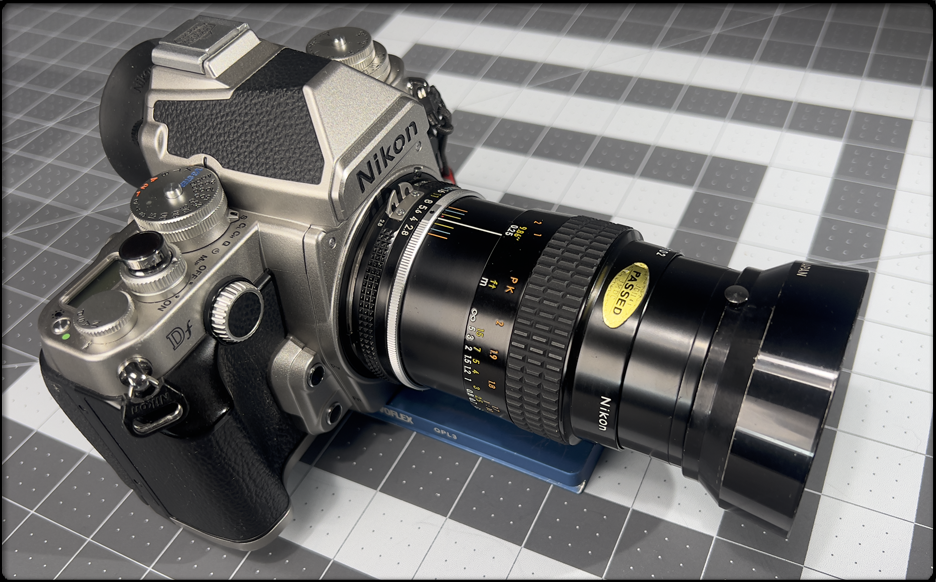
66 • Nikkor Micro 55mm f2.8
The Nikkor Micro 55mm f/2.8 (AIS/AI) is a legendary manual-focus macro lens renowned for extreme sharpness, flat field, and "silky" focusing. Optimized for close-ups, it offers 1:2 (0.5x) magnification, extending to 1:1 with a PK-13 tube. Its 6-element/5-group design ensures superb quality from infinity to close range. The AIS version (often identified by the orange color-coded minimum aperture on the aperture ring) features improved coatings and a slightly different design than the earlier AI version, but both are excellent performers, particularly for close-range• Reproduction Ratio: 1:2 natively (0.5x), 1:1 with optional PK-13 extension ring.
• Floating Elements: The CRC system improves performance at close distances.
• Focus Throw: Long 340-degree rotation allows for precise focusing.
• Superior Sharpness: Known as one of the sharpest AI-S lenses, peaking between f/5.6 and f/11.
• Production Year: 1979
• FOV: 43°
• Min Focus: 9.86"
• Aperture Scale: f2.8 to f32.0
• Filters: 52mm
• Dimensions: 63.5mm x 62mm
• Weight: 290g
• Lens Hood: Nikon HN-3
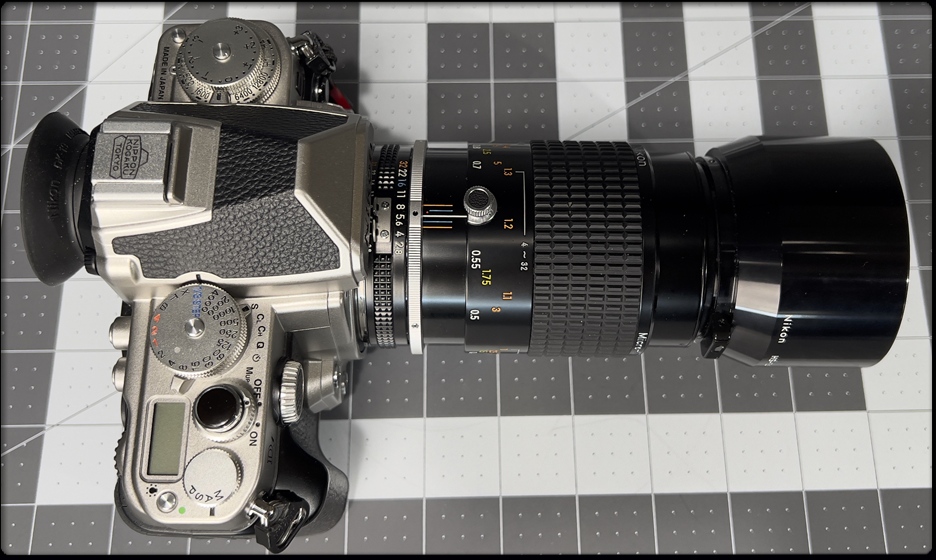
67 • Nikkor Micro 105mm f2.8
The Nikkor Micro 105mm f/2.8 lenses are renowned for1:1 macro magnification, exceptional sharpness, and creamy bokeh, making them ideal for close-up, portrait, and general photography. Key versions include the modern Z MC 105mm VR S (mirrorless), the popular AF-S VR G (DSLR), and the classic Manual Focus/AF-D models, all offering f/2.8 maximum aperture for excellent low-light performance.• Production Year: 2000 • FOV: 23-20° • Min Focus: 4.92" • Aperture Scale: f2.8 to f32.0 • Filters: 52mm
• Dimensions: 66.5mm x 83.5mm • Weight: 515g • Lens Hood: Nikon HS-14
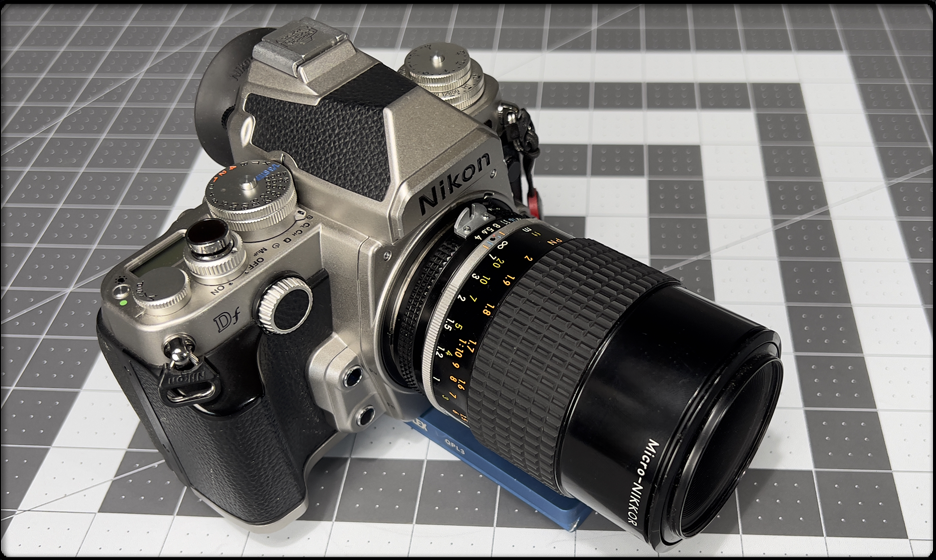
68 • Nikkor Micro 105mm f4.0
The Nikon Micro-Nikkor 105mm f/4 is a legendary manual-focus macro lens produced between 1975 and 1983 (Pre-AI, AI, and AI-S versions), highly regarded for its extreme sharpness, flat field, and compact build. It is designed for close-up photography, capable of reaching 1:2 (half life-size) magnification on its own, and 1:1 with the dedicated PN-11 extension tube.• Focus Throw: 310° . • Production Year: 1982 • FOV: 23-20° • Min Focus: 18.6" • Aperture Scale: f4.0 to f32.0 • Filters: 52mm
• Dimensions: 68.5mm x 104mm • Weight: 500g • Lens Hood: Built In
69 • Nikkor Micro 200mm f4.0
The Nikon Micro-Nikkor 200mm f/4.0 AI-S IF (introduced early 1980s) is a legendary manual-focus telephoto macro lens featuring Internal Focusing (IF) for smooth handling and exceptional sharpness. It offers a 1:2 (0.5x) reproduction ratio, a built-in telescoping lens hood, and a 9-blade diaphragm, designed for macro work, portraits, and distant subjects.• Production Year: 1982 • FOV: 12-20° • Min Focus:18.0" • Aperture Scale: f4.0 to f32.0 • Filters: 52mm
• Dimensions: 66mm x 172mm • Weight: 800g • Lens Hood: Built In
• Nikkor Zoom
70 • Rare Nikkor Zoom ED 200-400mm f4.0
The Nikon AI-s Zoom-Nikkor 200-400mm f/4 ED is a legendary manual-focus lens that earned its "rare" status through extremely limited production. Released in 1983 and discontinued around 1988, Nikon reportedly produced fewer than 500 units in total.• Rarity: With under 500 units ever made, it is significantly rarer than the subsequent autofocus versions (VR I and VR II).
• Design: It features a massive "push-pull" zoom and focus design, making it heavier and more physically demanding to use than modern counterparts.
• Production Year: 1983 • FOV: 81 - 48° • Min Focus: 24.0" • Aperture Scale: fxxx to fxxx • Filters: 72mm
• Dimensions: 75mm x 112mm • Weight: 600g • Lens Hood: Nikon HK-7
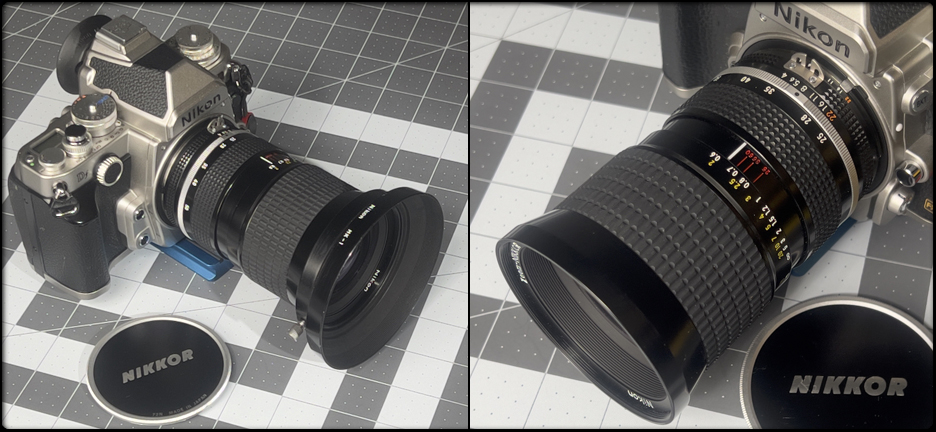
71 • Nikkor Wide Zoom 25-50mm f4.0
The Nikkor 25-50mm f/4.0 AIS (and AI) is a vintage manual focus wide-angle zoom lens, produced by Nikon between 1979 and 1981, known for its exceptional image quality that rivals fixed prime lenses. Often described as having a "heavy" or "tank-like" construction, this lens was one of Nikon's widest zooms during its era.• Image Quality: Famous for excellent sharpness, especially between 35mm and 40mm, often outperforming or matching prime lenses of its time. It is noted for high contrast and producing "rounded" or very sharp 3D-like images.
• Performance at Wide/Tele Ends: While generally good, the 25mm end performs best at f/8-f/11, while the 50mm end can be slightly softer at f/4, improving significantly at f/5.6-f/11.
• Production Year: 1983 • FOV: 81-48° • Min Focus:24.0" • Aperture Scale: f4.0 to f22.0 • Filters: 729mm
• Dimensions: 000mm x 000mm • Weight: 0000g • Lens Hood HK-7
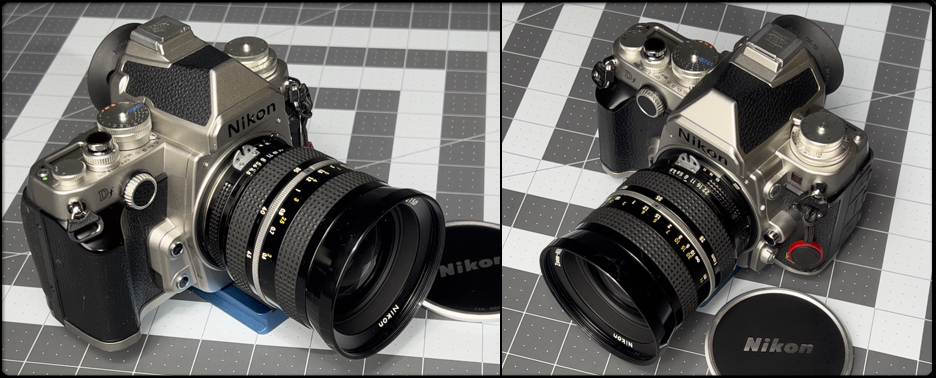
72 • Nikkor Wide Zoom 28-45mm f 4.5
The Nikkor Wide Zoom 28-45mm f/4.5, released in August 1975, was the world’s first genuine wide-angle zoom lens for 35mm SLRs, designed by Souich Nakamura. It features a compact, 2-group push-pull manual zoom design with 11 elements in 7 groups. Known for a warm, rich, and sharp output, it excels in interior and travel photography despite its moderate zoom range.• Release Date: August 1975 (discontinued, 20,000 units
• K-series (1975-1977): Earlier non-Ai version.
• Ai-series (1977-1978): Updated for direct aperture indexing on newer bodies.
• Lens Hood: Uses the optional KH-1 slip-on lens hood.
• Macro Setting
• Production Year: 1975
• FOV: 74 - 51°
• Min Focus: XX.X"
• Aperture Scale: f4.5 to f22.0
• Filters: 72mm
• Dimensions: 75mm x 91mm
• Weight:440g
• Lens Hood: Nikon HK-1
73 • Nikkor Macro Zoom 28-55mm f 3.5/4.5
Text Goes Here• Text Goes Here
• Production Year: 1975
• FOV: 74 - 51°
• Min Focus: XX.X"
• Aperture Scale: f4.5 to f22.0
• Filters: 72mm
• Dimensions: 75mm x 91mm
• Weight:440g
• Lens Hood: Nikon HK-1
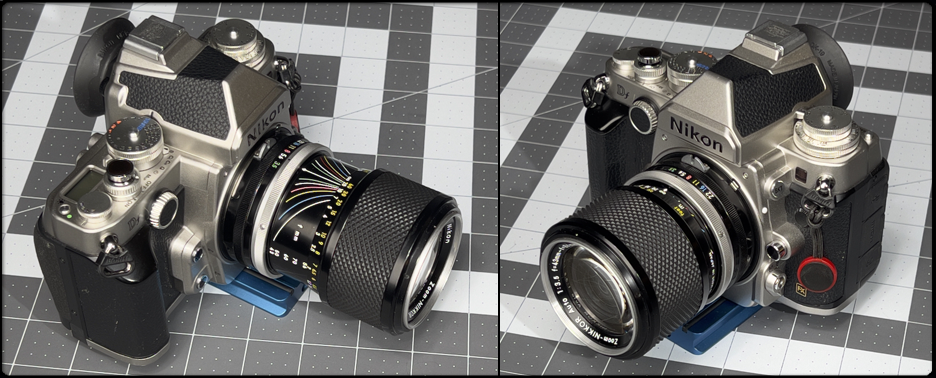
74 • Nippon Kogaku Zoom 43-86mm f3.5
The Nippon Kogaku Zoom-Nikkor 43-86mm f/3.5 (introduced 1963) was the first truly popular, compact, and affordable zoom lens for 35mm SLRs. It is a manual focus, push-pull zoom with a constant f/3.5 aperture, often favored for its vintage, low-contrast, and "filmic" rendering, despite a historical reputation for softness. The lens is often nicknamed "yon-san-hachi-roku" (4-3-8-6).
• Production Year: 1972
• FOV:52 - 28°
• Min Focus: 4.0 ft
• Aperture Scale: f3.5 to f22.0
• Filters: 52mm
• Dimensions: 66.5mm x 78mm
• Weight: 410g
• Lens Hood: Nikon 43/84
• Nikkor Super Zoom-Tele
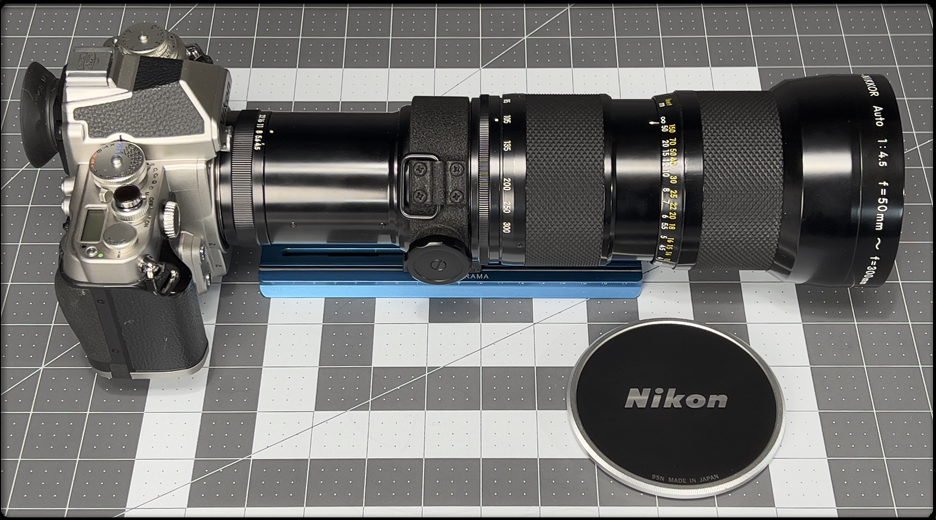
75 • Nikkor Super Zoom 50-300mm f4.5
The Nikkor 25-50mm f/4.0 AIS (and AI) is a vintage manual focus wide-angle zoom lens, produced by Nikon between 1979 and 1981, known for its exceptional image quality that rivals fixed prime lenses. Often described as having a "heavy" or "tank-like" construction, this lens was one of Nikon's widest zooms during its era.• Production Year: 1971 • FOV: 46 - 8° • Min Focus: 8.5 ft • Aperture Scale: f4.5 to f22 • Filters: 95mm
• Dimensions: 98mm x 292mm • Weight: 2270g • Lens Hood: Nikon HN-11
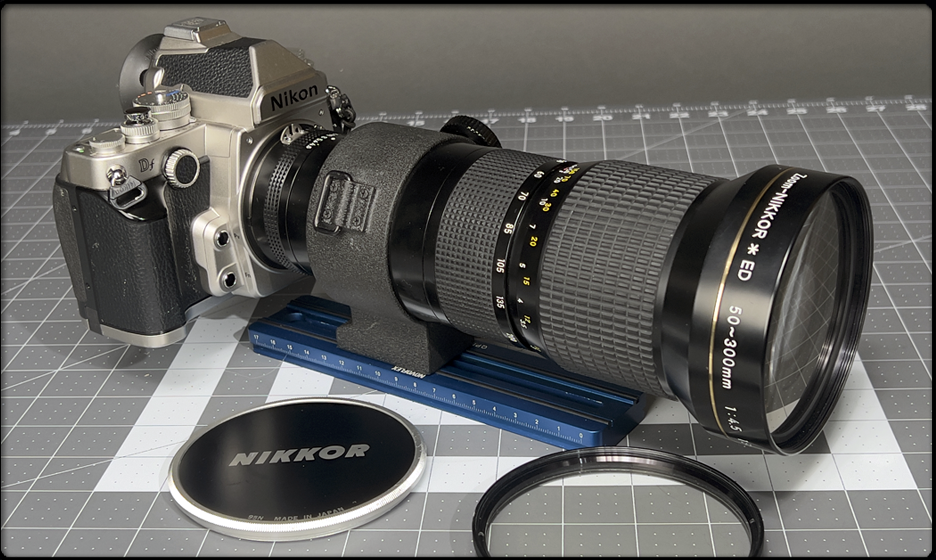

75 • Nikkor Super Zoom ED IF 50-300mm f4.5
The Nikkor 50-300mm f/4.5 is a legendary, heavily built manual focus "super zoom" lens (often with ED glass) from the 1970s/80s, popular for its 6x zoom range. It offers a constant f/4.5 aperture, providing decent sharpness and distinct vintage bokeh, though it is very heavy (approx. 2.3kg) and ideally requires a tripod. This lens was considered a "super" lens for its time and is highly regarded as an undervalued, high-performance vintage telephoto zoom.• Image Quality: Offers sharp results, with ED glass minimizing chromatic aberration. Often considered parfocal, meaning focus remains consistent throughout the zoom range.
• Build: Extremely heavy and rugged, designed for professional sports and wildlife photography of the era.
• Vintage Feel: Exhibits some flare when pointed at light sources but offers a sought-after cinematic look.
• Production Year: 1985 • FOV: 46 - 8° • Min Focus: 8.50 ft • Aperture Scale: f4.5 to f32 • Filters: 952mm
• Dimensions: 98mm x 247mm • Weight: 2200g • Lens Hood: Nikon HN-5

76 • Nikkor Super Zoom 85-250mm f9.5
The Nikkor 85-250mm lens was a groundbreaking release from Nippon Kogaku (Nikon), serving as Japan's first commercial 35mm zoom lens when it debuted in November 1959. While you mentioned an "f/9.5" aperture, this focal range is actually associated with a maximum aperture of f/4 to f/4.5. The f/9.5 value is more commonly found on the related 200-600mm telephoto zoom from the same era.• Production Year: 1969 • FOV: 28 - 10° • Min Focus: XX.X" • Aperture Scale: fxxx to fxxx • Filters: Series IX
• Dimensions: 89mm x 305mm • Weight: 20kg • Lens Hood: Nikon HN-10
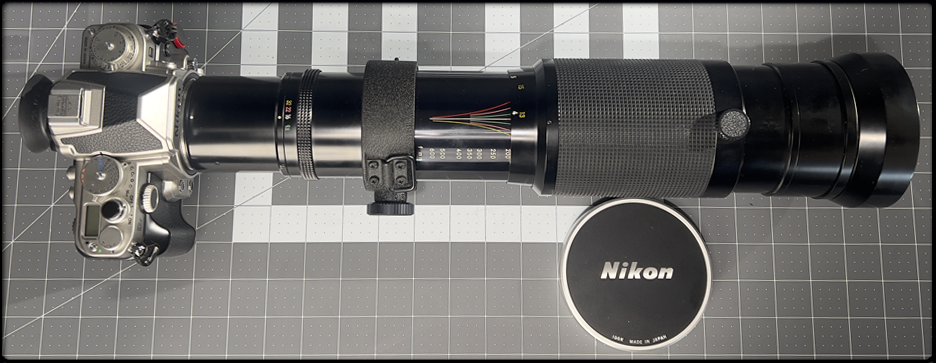

77 • Nikkor Super Zoom 200-600mm f9.5
The Zoom-Nikkor 200-600mm f/9.5 is a vintage manual focus super-telephoto lens produced by Nikon, notably as one of their earliest zoom lenses launched around 1961. It is a single-action push-pull zoom and focus lens designed for Nikon F-mount• Rare Collectible: 1,168 units produced.
• Production Year: 1982 • FOV: 12 - 4° • Min Focus: 13.0 ft • Aperture Scale: f9.5 to f32.0 • Filters: Series IX
• Dimensions: 89mm x 382mm • Weight: 2500g • Lens Hood: Nikon HN-10
• Nikkor Flat Field

79 • Nikkor Rayfact MJ90 f4.0
The Nikon Rayfact MJ 90mm F4 (often listed as OVM05042MN) is a specialized, high-resolution industrial macro lens produced by Tochigi Nikon, released around July 2010. It is designed for machine vision, industrial inspection (PCB, flat panel, wafer), and high-resolution line-scan applications, rather than general photography. It is known for its ability to produce sharp, detailed images, particularly in low-magnification scenarios.• Magnification Range: Variable -0.05x to -0.5x
• Wavelength Range: 400 to 700 nm
• Lens Mechanism: Optical design with a floating mechanism to minimize performance variations across the variable magnification range. • Performance: It offers good resolution and low distortion, with tests indicating excellent performance at low magnifications, behaving quite differently from standard photographic macro lenses.
• Production Year: 1997
• FOV: 47 34.5°
• Min Focus: 9.0 - 32.0"
• Aperture Scale: f4.0 to f22.0
• Filters: 52mm
• Dimensions: 95mm x 134.9mm
• Weight: 950g
• Lens Hood: B+W 52mm
• Nikkor Scope
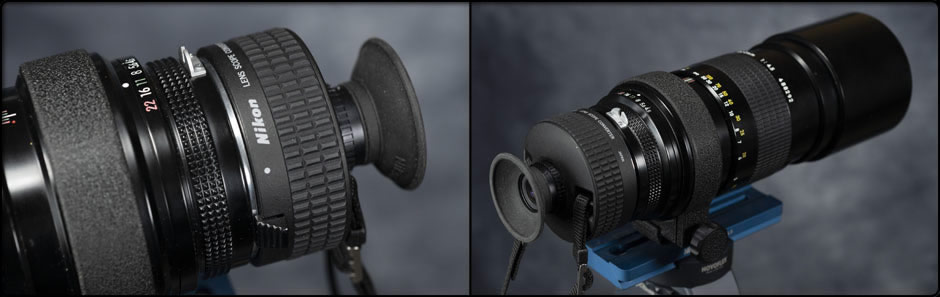
80 • Nikon Lens Scope Converter
The Nikon Lens Scope Converter is a vintage manual-focus accessory that attaches to the rear of Nikon F-mount lenses, turning them into high-quality terrestrial telescopes or microscopes. It features an erecting prism and a 10mm eyepiece, offering 10x magnification for every 100mm of focal length (e.g., a 200mm lens = 20x telescope).• Microscope Usage: Attaching the converter to a Micro-Nikkor lens (e.g., 55mm f/2.8) creates a high-magnification macro viewing scope.
• Magnification Calculation: Focal length of lens / 10 = Telescope Power. • Aperture Limitation: Optimized for lenses around f/3.5 or f/4 • Features: Includes an adjustable diopter eyepiece • Image Quality: Provides excellent central sharpness • No Imaging: It is for visual observation only
• Production Year: 0000 • FOV: 000° • Min Focus:00.0" • Aperture Scale: f2.8 to f22.0 • Filters: 39mm Rear - L1BC, 056, A2, and B2
• Dimensions: 000mm x 000mm • Weight: 0000g • Lens Hood N/A
81 • Spiratone Portragon 100mm f/4 Lens • Nikon F Mount
The Spiratone Portragon 100mm f/4 is a vintage, budget-friendly soft-focus portrait lens first released around 1976. It does not natively have a permanent Nikon mount; instead, it uses a universal T-mount (T2) system that allows it to adapt to Nikon F-mount SLR and DSLR cameras using a simple T-mount adapter ring. Because it is a highly specialized "lo-fi" art lens, its specifications are extremely minimal and unique compared to standard 100mm lenses:Key Specifications
• Focal Length: 100mm • Aperture: Fixed at f/4. • Massive spherical aberration for a dreamy, glowing, soft-focus look. • Focus Type: Manual focus only. It uses an all-aluminum helical focusing barrel. • Minimum Focus Distance: 3.2 feet (approx. 0.9 meters). • Base Mount: T-mount thread (M42 x 0.75mm), adapted to Nikon F. • Filter Thread: 44mm female front ring.

360icon • The Old Creepy House Explorers Club
Out in the Boonies Exploration and Captures • Since 2007
All Elses Passes • Art Alone Endures.
K.Durk • Copyright 2007-2056 All Rights Reserved
